

Learning how to use a dog harness correctly makes a real difference for your furry friend’s safety and comfort. Harnesses are safer than traditional collars for many dogs as they distribute pressure across the chest and shoulders rather than the neck. This simple shift prevents strain on the trachea, thyroid, and cervical spine—especially important for dogs that pull.
This guide covers how to put dog harness on for different harness styles, how to wear dog harness gear comfortably, and specific tips for fitting dog harness on puppies. You’ll find both quick-start instructions and deeper guidance on how to fit a dog harness for readers who want detailed help. Whether you have a wiggly pup or an adult dog, these steps will get you walking confidently.
What Happens If a Dog Harness Is Fitted Incorrectly?
A poorly fitted harness can cause chafing, allow the dog to escape, or restrict their movement. An improperly fitted harness leads to discomfort for the dog, making it counterproductive and potentially a safety hazard.
-
Chafing behind the front legs and rubbing on the sternum or armpits
-
Dogs pulling harder to find a comfortable position—opposite of what a no-pull harness should achieve
-
Loose harnesses let dogs back out or slip an elbow through, creating escape risks near traffic
-
Long-term effects include sore muscles, restricted shoulder reach, and negative associations with walks
-
Pressure on the throat if positioned incorrectly, defeating the purpose of using a harness over a flat collar
Types of Dog Harnesses and When to Use Them
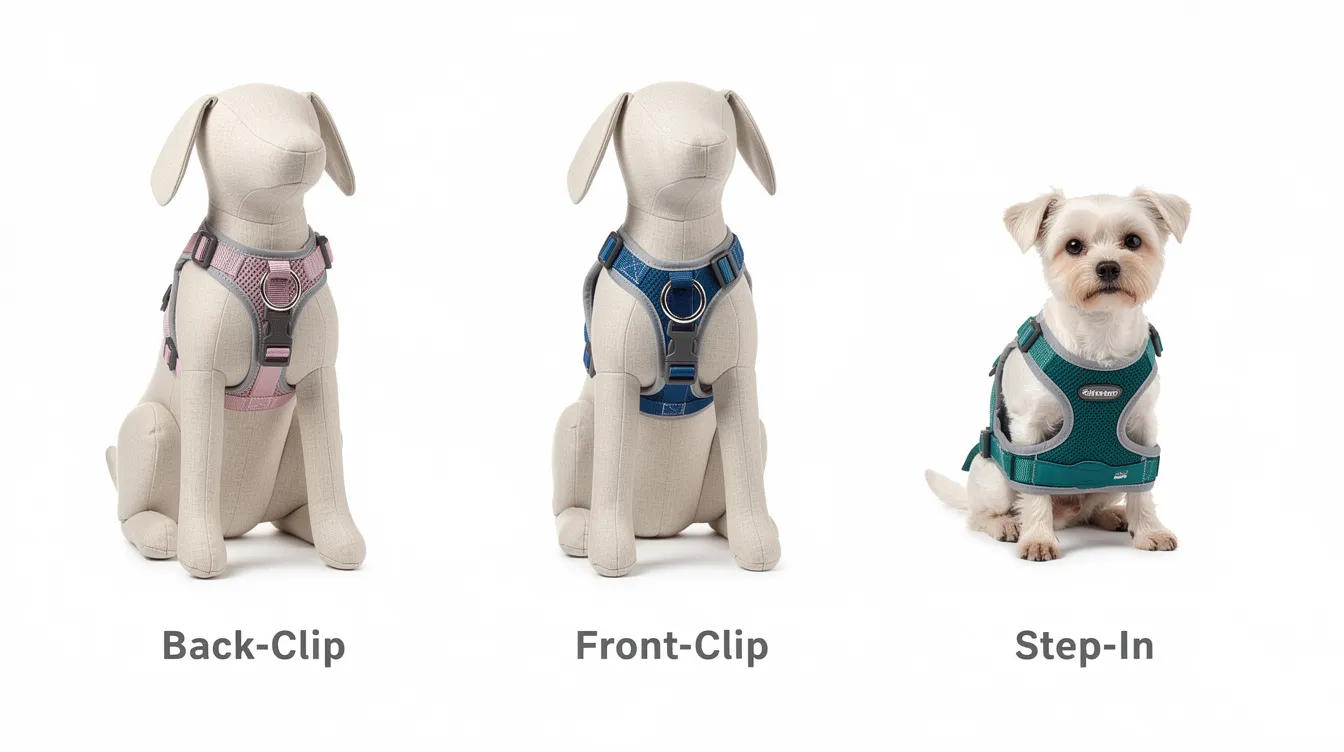
Before you learn how to put dog harness on correctly, understanding harness types helps you pick the right harness for your situation. Dog harnesses typically fall into two main categories: step-in harnesses and overhead harnesses, each designed for different ease of use and comfort for the dog.
-
Back-clip harnesses are popular for everyday walks and are suitable for dogs that do not pull, as they provide comfort and reduce the risk of neck injury. The leash attaches to the d ring on the dog’s back between the dog’s shoulders.
-
Front-clip harnesses, often marketed as no-pull harnesses, can help control dogs that tend to pull. When your dog pulls, the leash redirects their body sideways toward you rather than straight back.
-
Step-in harnesses work well for small dogs and little dogs that dislike things going over their heads. Your dog literally steps into two loops.
-
Head halter style harnesses sit over the nose and behind the ears, offering more control for strong pullers. They require gentle handling and slow introduction.
-
Dual-ring harnesses feature D-rings on both the chest and back, allowing for versatile leash attachment options and better control while maintaining the dog’s natural movement.
How to Measure and Choose the Right Size Harness
Correct sizing comes first before learning how to fit a dog harness on any breed or age. Use a flexible tape measure to find the circumference of the thickest part of the neck and the widest part of the ribcage (girth).
-
To measure your dog for a harness, measure their girth about 2 inches from their elbow and their neck slightly lower than you would for a normal collar
-
The girth measurement wraps around the widest part of the rib cage, usually 2-3 inches behind the front legs
-
Most harnesses come in sizes small through extra large, and it’s easier to pick a size if you know your dog’s weight and body measurements
-
A 9 kg Cocker Spaniel measured at 52 cm chest might fall between size S and M—choose the size with room for adjustment
-
Check manufacturer size guides, especially for brands with unique patterns like a Happy Tails dog harness or other popular lines
-
Ensure the harness is adjustable enough to accommodate coat changes and growth in young dogs
How to Put On a Dog Harness: Step-by-Step Instructions
This section is the core guide for how to put dog harness on, with clear steps for each main harness style. Always start in a quiet room indoors before trying the new harness outside. The instructions below cover both adult dogs and puppy harness scenarios.
How to Put On a Back-Clip Dog Harness
Back clip harnesses have the leash attachment at the d ring on the dog’s back, between the shoulders. They’re straightforward once you know the sequence.
-
Identify the neck loop (smaller loop) and the chest strap
-
Slip the neck loop over the dog’s head like a collar
-
Bring the chest strap down between the front legs
-
Reach under the dog’s belly and clip behind the dog’s shoulders
-
Check that the harness is not twisted and the back D-ring is centered
After the dog harness is put on, do a quick two-finger test around both the dog’s neck and girth areas. You should be able to easily slip two fingers under each strap.
How to Put On a Front-Clip / No-Pull Dog Harness
Front clip harnesses have a D-ring at the dog’s chest. Use a front-clip (or no-pull) harness for training to prevent pulling and allow for steering the dog back to your side.
-
Place the top section over the dog’s shoulders
-
Bring the center strap between the legs
-
Clip under the dog’s chest, securing the body
-
Attach the leash to the front clip D-ring
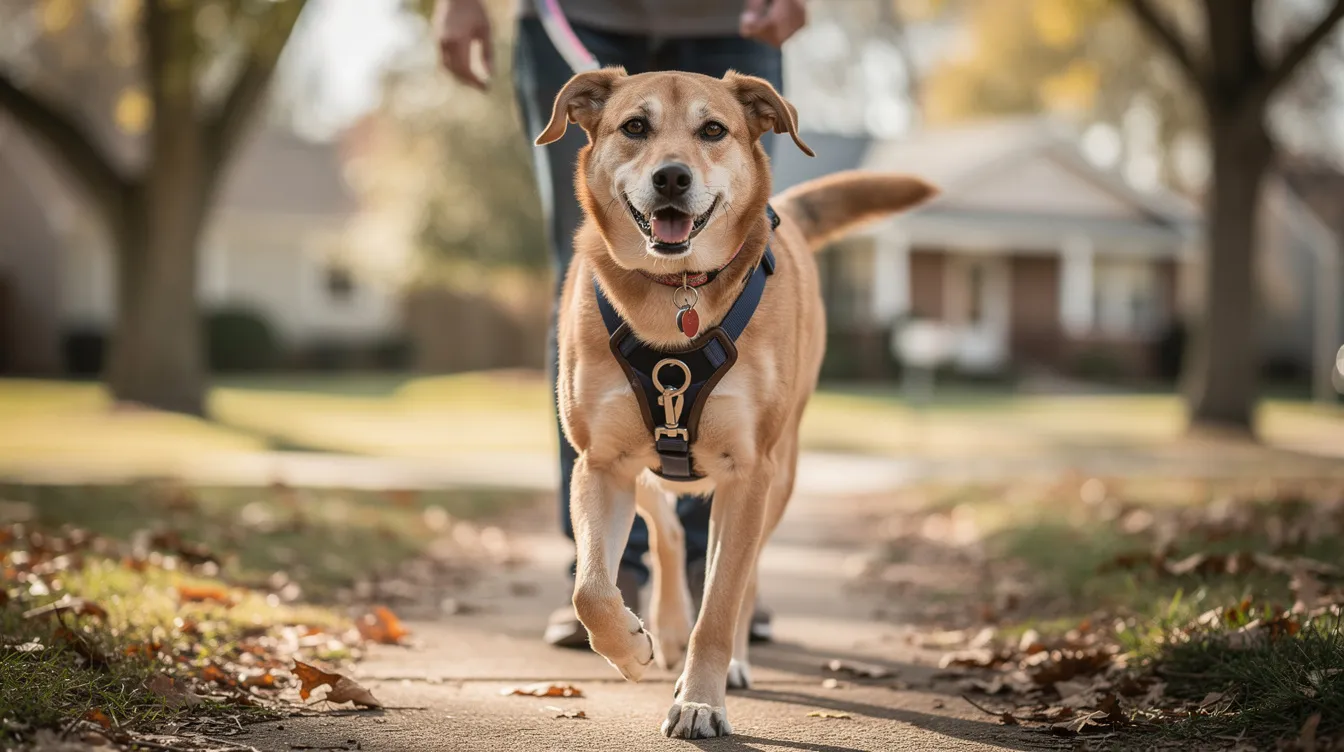
Front-clip harnesses, often marketed as no-pull harnesses, may restrict shoulder movement and natural gait if fitted poorly. Position the straps so they don’t press against the front of the dog’s shoulders, allowing full strides.
How to Put On a Step-In Dog Harness
A step in harness is ideal for dogs that dislike gear pulled over their heads. To put on a step-in harness, lay it flat on the ground, have your dog step into the leg loops, and then pull the harness up against their chest before securing it with the buckles.
-
Lay the harness flat so two triangles are visible where the paws go
-
Position the dog behind the harness
-
Guide each front paw into its loop—the dog step pattern is natural for most dogs
-
Lift the sides up around the dog’s body and buckle on the back
Straighten any twisted bottom straps before clipping. The central front piece should sit on the dog’s chest, not too high into the throat.
How to Put On an Overhead Harness
An overhead harness is slipped over the dog’s head first, then strapped around the chest or body. When using an overhead harness, slide the neck loop over your dog’s head, guide their front paws through the leg loops, and then secure the straps around their body.
-
Hold the harness open and identify the front from the back
-
Reward the dog for approaching
-
Slide the smaller loop over the dog’s head
-
Adjust so the chest panel is centered
-
Clip the belly strap behind the front legs
Check that no fur is caught in the buckle, especially with long-coated breeds. The dog should enjoy wearing the harness without discomfort when fitted correctly.
How to Put On a Head-Collar / Head Harness
Head-collar harnesses sit over the nose and behind the ears, with the leash clipping under the chin. These are advanced tools requiring slow introduction.
-
Let the dog sniff the nose loop, then reward with treats
-
Place the dog’s nose through the loop briefly, reward, remove
-
Gradually build duration before clipping the neck strap
-
Check that the nose loop allows panting and yawning
Never jerk or yank on the lead when using a head halter. If you’re unsure, seek professional guidance for proper training.
How to Help Your Dog or Puppy Accept a Harness
Many readers asking how to use dog harness are actually struggling with a pup that resists. Dogs do not naturally understand harnesses; they must learn to associate them with positive outcomes like treats and walks.
-
Use positive reinforcement: show harness and reward, touch the dog’s shoulders and reward, place over head and reward
-
Keep sessions under 5 minutes for puppies
-
Do several short practice runs per day, ending on success
-
Turn harness training into a routine so the pet learns “harness on” predicts fun
-
If the dog panics, step back rather than forcing—avoid creating long-term fear
Using a dog harness correctly involves a gradual introduction to build positive associations, ensuring a precise two-finger fit, and selecting the right leash attachment point for training goals.
Special Tips for “Puppy Harness: How to Put On”
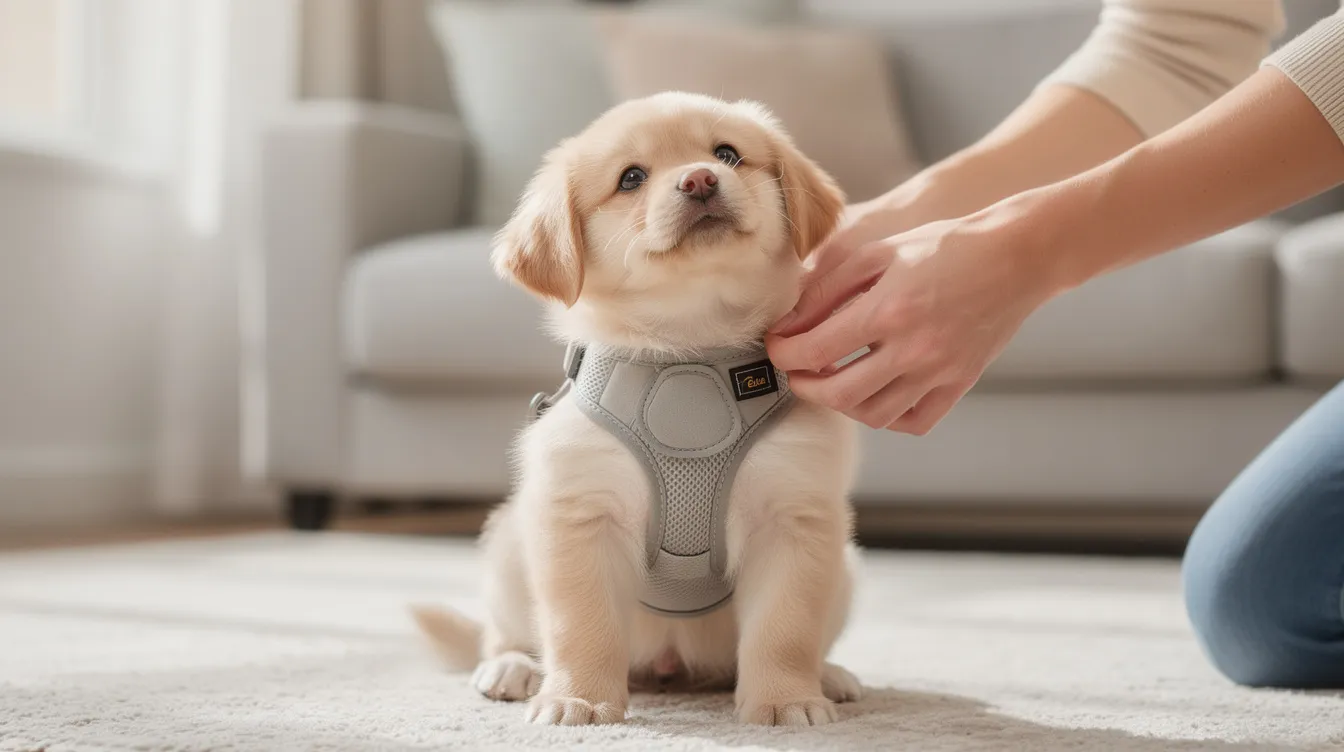
Very young puppies aged 8-16 weeks need extra patience. Here’s how to fit puppy harness gear gently:
-
Choose lightweight, softly padded harnesses that won’t overwhelm a small frame
-
Use a play-based approach: let the puppy chase a treat through the neck hole
-
Click or praise when they poke their head through, then briefly clip and unclip
-
Check sizes frequently—puppies outgrow a new harness within weeks
-
Build a positive association so the puppy looks forward to wearing gear
How to Fit a Dog Harness: Checking and Adjusting
Learning how to fit a dog harness is just as crucial as knowing how to put it on. When fitting a harness, ensure that you can fit two fingers between the harness and your dog’s body to confirm it is snug but not too tight.
-
Apply the two-finger rule at the dog’s neck and girth points—more space means too loose, less means too tight
-
A properly fitted harness should be snug but not tight, allowing you to fit two fingers between the harness and your dog’s body
-
Front chest straps should sit horizontally across the chest bone, not cutting into the throat or armpits
-
A well-fitted harness should sit snugly without pinching, stay clear of the throat and armpits, and allow for a full, natural range of motion
-
Do movement checks: have the dog walk, sit, and turn; watch for rubbing or restricted dog’s movement
-
When fitting a harness, ensure that it does not restrict the dog’s movement, allowing them to take full strides without discomfort
-
Check the fit of a harness regularly as dogs can gain weight or muscle, and harnesses can loosen over time
The Wiggle Test determines if a dog’s harness fits properly; if it slides off or shifts excessively, the girth strap needs tightening.
Common Fitting Mistakes to Avoid
-
Leaving the girth strap so loose the dog can back out or slip a dog’s leg through
-
Tightening so much that skin bulges around the strap
-
Having the neck strap too high like a collar, putting pressure on the windpipe
-
The chest strap of a harness should sit low, covering the dog’s breastbone, not putting pressure on the throat
-
Twisted or crossed straps creating localized pressure points on the dog’s belly or sides
-
D-ring rotation to one side indicates the chest strap needs adjustment
Troubleshooting: When Your Dog Still Hates the Harness
Some dogs struggle even when owners follow all steps correctly. This is normal—patience pays off.
-
Return to basics: pair the harness with high-value treats and brief sniffy walks
-
Put it on indoors for very short durations, then remove before frustration builds
-
Check for physical issues—rough edges, misaligned buckles, or harness incorrectly sized
-
If the dog freezes or growls, consult a positive-reinforcement trainer
-
For branded products like Happy Tails dog harness how to use questions, contact the manufacturer for harness-specific tips
Most harnesses require some adjustment period. Your furry friend will walk nicely once comfort and positive association are established.
Quick FAQ About How to Use a Dog Harness
1. How tight should a dog harness be?
You should be able to slip two fingers between the harness and body at both neck and girth points. The harness fits correctly when snug but not restricting.
2. Can my dog wear a harness all day?
Most dogs shouldn’t wear harnesses continuously. Remove them when indoors to prevent matting, skin irritation, and to let the skin breathe.
3. Is a front-clip or back-clip harness better for pulling?
Front clip harnesses work better for dogs that pull because they redirect pressure and turn the dog’s chest toward you. Back clip harnesses suit calm dog walks.
4. How often should I check the fit on a puppy harness?
Check weekly. Puppies grow fast, and a puppy harness that fit last week may be too tight today.
5. How do I put dog harness on a wiggly puppy?
Use treats to lure their head through the neck loop, reward each step, and keep sessions short. Adjust the harness once secure.
6. Are harnesses safe for running and hiking?
Yes, a well fitted harness provides more control and safety than a collar during active exercise. For car travel, use separate crash-tested restraints.
Conclusion: Confidently Using a Dog Harness Every Day
You now know how to put dog harness on, how to fit a dog harness properly, and how to help both dogs and puppies accept wearing one through positive training. The benefits are clear: improved control, reduced neck strain on the dog’s body, safer walks, and better training outcomes when the harness is introduced positively.
Re-check sizing and fit regularly, especially for growing puppies or dogs changing weight. With the right approach, harness time becomes something your dog looks forward to. Put these steps into practice on your next walk and share this guide with other dog owners who need help with secure, comfortable harness use.