

Key Takeaways
-
A dedicated dog seat for car, dog seat belt, or car harnesses for dogs is not just a comfort upgrade. It helps reduce crash injury risk, driver distraction, and legal trouble.
-
Cheap box-style boosters and generic dog restraints for cars can be useful for comfort, but many dog car seat bunnings or big-box options are not independently crash-tested.
-
Small dogs often suit a booster seat plus harness, medium dogs usually need a dog seat belt and harness, and large dogs are often safest in a secured crate or heavy-duty harness.
-
A car harness puppy must be adjustable because puppies grow quickly, while ute and 4WD setups need special care with a dog ute restraint bunnings-style tether, non-slip mat, and shade.
-
The safest setup is the one that fits your dog, your vehicle, and your travel habits - and is checked before every drive.
Travelling with a dog should feel simple: clip in, drive safely, arrive happy. But the right dog seat for car matters more than many owners realise. At 50–60 km/h, an unrestrained dog can become a dangerous projectile, injuring themselves and passengers.
This guide explains how to choose, install, and use the right dog car restraint in 2026, including booster seats, harnesses, seat belts, crates, ute restraints, and practical dog car accessories.
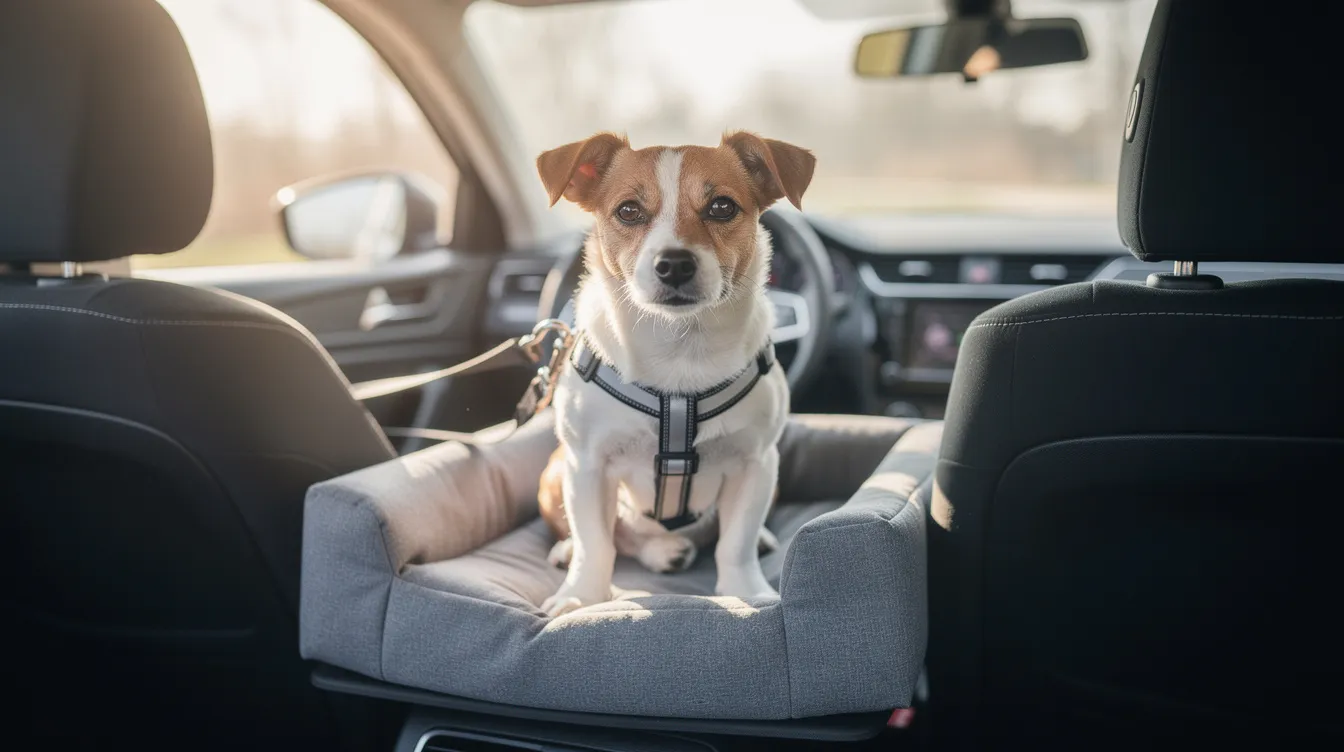
Performing Security Verification Before Dog Travel
Before every trip, think of your dog’s travel setup like performing security verification. You would not ignore a warning light on your dashboard, and you should not ignore a loose clip, twisted belt, or badly fitted harness.
Just as a website might show verification successful before granting access, your dog’s travel setup needs a quick “all clear” before the car moves.
Here is a simple pre-drive checklist:
-
Inspect the dog seat for car for loose stitching, cracked clips, or movement in the base.
-
Test the dog seat belt latch by pulling firmly after it clicks in.
-
Check that the harness sits across the chest, not the throat.
-
Make sure the tether is short enough to stop roaming but long enough for sitting or lying down.
-
Confirm your dog in car accessories, such as covers, barriers, hammocks, and organisers, are fitted securely.
-
Re-check everything before longer dog travel car trips, highway drives, or rough-road journeys.
You may have seen security messages online such as website uses a security, uses a security service, security service to protect, protect against malicious bots, performance and security, website verifies, page is displayed, displayed while the website, ray id, bot, waiting for www.bunnings.com.au, waiting for www.bunnings.com.au to respond, or www.bunnings.com.au to respond. The same idea applies here: do the checks first, then travel.
Why Your Dog Needs a Dedicated Dog Seat for Car
A loose dog in a moving vehicle is a safety risk. In a sudden stop, even a small 5 kg dog can hit the seat, dashboard, window, or passenger with serious force. Larger dogs can cause even more damage.
Dog car safety seats are designed to provide support and safety for pets during travel, helping to prevent injury in the event of sudden stops or accidents.
There are also legal considerations. In Australia, rules vary by state and territory, but dogs generally must not distract the driver, sit on the driver’s lap, block vision, or ride unsecured in a ute tray. Some animal welfare rules require dogs on trays to be enclosed or restrained so they cannot fall or jump out. You can review official guidance for working dogs and ute travel through Agriculture Victoria.
A good restraint also helps with:
-
Less driver distraction
-
Reduced anxiety for nervous dogs
-
Cleaner seats and less fur in the cabin
-
Better control when doors open
-
Safer long-distance travel
Many owners search for a dog car seat bunnings product or grab a bunnings dog car seat while shopping for other supplies. That can be a starting point, but it should not be the end of your safety research. Some products are comfort boosters, not crash-tested restraints.
The goal is not just to buy a basket labelled “pet seat.” The goal is to choose a secure, comfortable, properly anchored dog seat for car that suits your dog’s size, your vehicle, and the way you travel.
Types of Dog Restraints for Cars
There are several types of dog in car accessories used for restraint. Each has a different purpose, and not every option suits every dog.
|
Restraint type |
Best for |
Main benefit |
Main caution |
|---|---|---|---|
|
Booster seat |
Small dogs |
Height, comfort, containment |
Must be anchored properly |
|
Harness and tether |
Medium dogs |
Flexible, easy daily use |
Fit and crash rating matter |
|
Crate or carrier |
Small to large dogs |
Strong containment |
Must be tied down |
|
Ute tether or crate |
Working dogs, utes |
Legal tray restraint |
Heat, slack, and anchor points matter |
Booster seats
A booster car dog seat is usually a raised, padded seat that lets a small dog see out of the window. This can reduce anxiety and motion sickness for some dogs.
The best dog seats and car boosters prioritize crash-tested structures, secure multi-point vehicle integrations, and elevated window views to reduce pet anxiety and motion sickness.
Some dog car seat bunnings products fall into this category. Look for models that attach through the vehicle’s seat belt system, not just by looping around the headrest.
Choose seats that channel the actual car seatbelt through the frame; straps that loop around a headrest are comfort boosters, not safety devices.
A good dog car safety seat should have multiple attachment points to secure the dog safely in the vehicle.
Car harnesses for dogs
Car harnesses for dogs are padded body harnesses designed to spread force across the chest and shoulders. Some dog harnesses are specifically made for car use and can be used in conjunction with seat belts for added safety during travel.
For puppies, choose a dedicated car harness puppy option with broad adjustment. Puppies can grow quickly through the chest and ribs, so re-fit the harness often.
Dog seat belts
A dog seat belt is usually a short tether that clicks into the vehicle’s buckle or attaches to an anchor point. It should always connect to a body harness, never a collar.
Always clip the booster's interior tether to a crash-tested body harness and never clip it to a collar, which poses a severe strangulation hazard during sudden stops.
A booster seat must always be paired with a crash-tested safety harness rather than a standard collar to prevent severe neck injury during sudden stops.
Some dog seat belt bunnings styles are designed mainly for convenience and containment. Before trusting one as your only safety device, check whether there is published crash-test data, metal hardware, reinforced stitching, and clear weight limits.
Crates and carriers
For many dogs, especially large breeds, a secured crate can be one of the safest dog travel car options. The crate must be tied down so it does not slide, roll, or become a projectile.
A crate should be large enough for your dog to stand, turn, and lie down, but not so large that the dog slides across the interior during hard braking.
Ute restraints
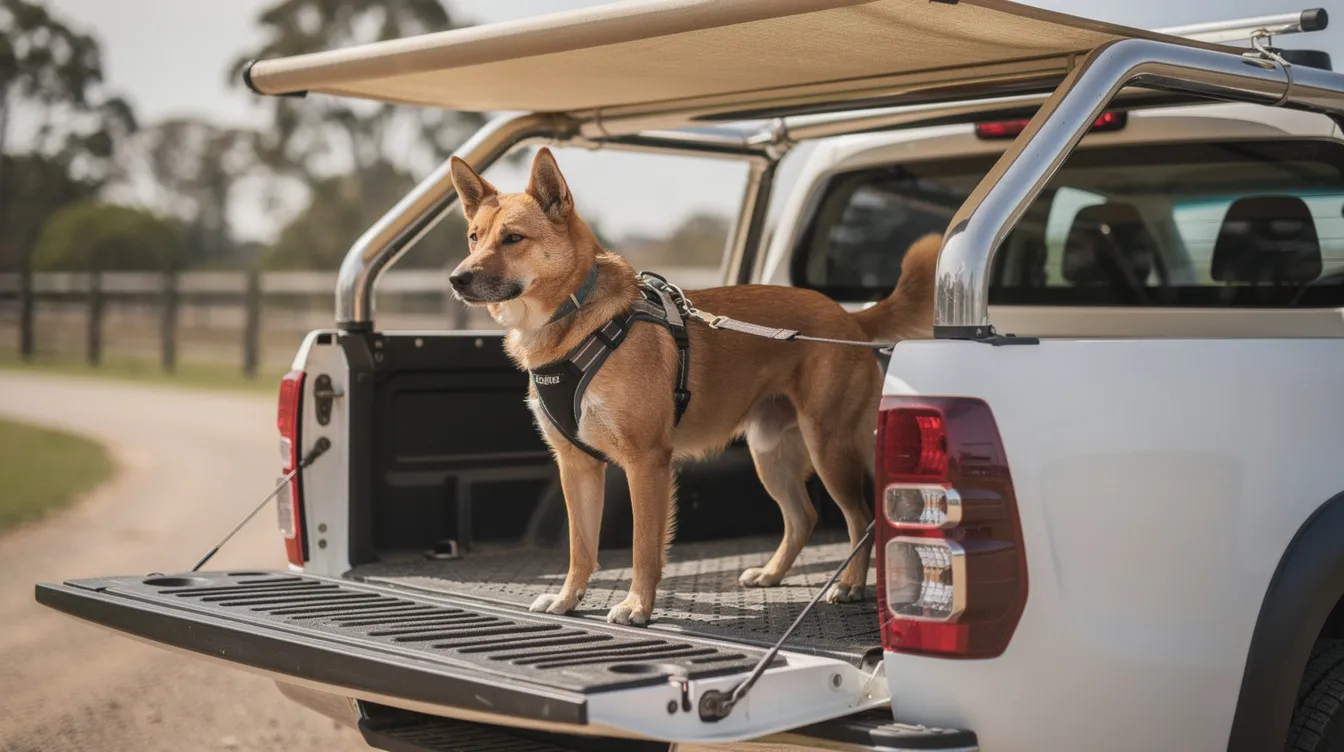
A dog ute restraint bunnings-style chain or tether must be used carefully. It should be short enough to stop the dog from falling or jumping off the tray, but long enough for the dog to sit and lie down.
It should attach to a padded body harness, not the neck. Add a non-slip mat, shade, water access on longer stops, and protection from wind and hot tray surfaces.
How to Choose the Right Dog Seat for Your Car
Choosing the right dog seat for car starts with the dog, not the product page.
Measure:
-
Weight
-
Chest girth
-
Neck base
-
Body length
-
Sitting height
-
Usual travel position
Then match the restraint to your dog’s size.
|
Dog size |
Typical weight |
Recommended setup |
|---|---|---|
|
Small |
Up to 10 kg |
Booster seat plus crash-tested harness |
|
Medium |
10–25 kg |
Harness plus dog seat belt |
|
Large |
25 kg+ |
Crash-tested crate or heavy-duty harness |
|
Working dogs / utes |
Varies |
Harness plus tray restraint or secured crate |
|
Strictly adhere to the manufacturer's weight limits to prevent the structural failure of the tether or base. |
|
|
If a product says “up to 10 kg,” do not use it for a 13 kg dog because it “looks strong enough.” Weight limits are part of the structural design.
When researching big-box products such as bunnings dog car seat, dog seat belt bunnings, or dog car harness bunnings, treat them as starting points. Look for:
-
Published crash-test information
-
Metal buckles instead of weak plastic clips
-
Reinforced stitching
-
Multi-point vehicle attachment
-
Clear installation instructions
-
Compatibility with your car’s seat belt or ISOFIX points
-
A return policy if it does not fit your vehicle
Independent testing has shown that not all harnesses perform equally. CHOICE has reported on Australian harness testing where several products failed at relatively modest crash-test speeds, which is why published safety data matters. You can read more from CHOICE’s dog car harness testing coverage.
Comfort matters too. A good dog seat belt and harness setup should let your dog sit or lie down without tangling. Breathable fabrics, removable padding, washable covers, and low-entry designs are especially useful for senior dogs.
For puppies, a car harness puppy should be adjustable in chest, girth, and strap length. Re-check the fit every few weeks during growth spurts.
Installing and Using Dog Seat Belts and Harnesses Safely
Even the best dog car restraint can fail if it is installed incorrectly.
Here is a simple installation process:
-
Place the booster seat, harness, or crate in the rear seat or cargo area.
-
Thread the vehicle’s seat belt through the approved belt path on car harnesses for dogs or through the frame loops on a booster dog seat for car.
-
Click the belt into place and pull it tight.
-
Attach the dog seat belt or internal tether to the harness D-ring.
-
Adjust the tether so your dog can sit and lie down but cannot reach the driver, windows, or front seats.
-
Pull-test the setup before driving.
Common mistakes include:
-
Clipping a dog seat belt bunnings tether to a collar
-
Leaving enough slack for the dog to reach the driver
-
Using a headrest loop as the only anchor
-
Ignoring product weight limits
-
Allowing twisted webbing
-
Using a walking harness with weak plastic buckles as a crash restraint
If your dog is new to restraints, practise at home first. Let your dog sniff the harness, reward calm behaviour, then try short parked-car sessions before short drives. A new dog seat belt and harness or new dog car accessories should not be introduced for the first time on a stressful highway trip.
For utes and 4WDs, attach a dog ute restraint bunnings-style chain or tether to a strong tray anchor point. Use swivels where possible to reduce tangling. Add a rubber mat, shaded canopy, and side protection where practical.
Dog in Car Accessories That Complete Your Setup
A secure dog seat for car is the foundation. The right dog in car accessories make travel cleaner, calmer, and easier.
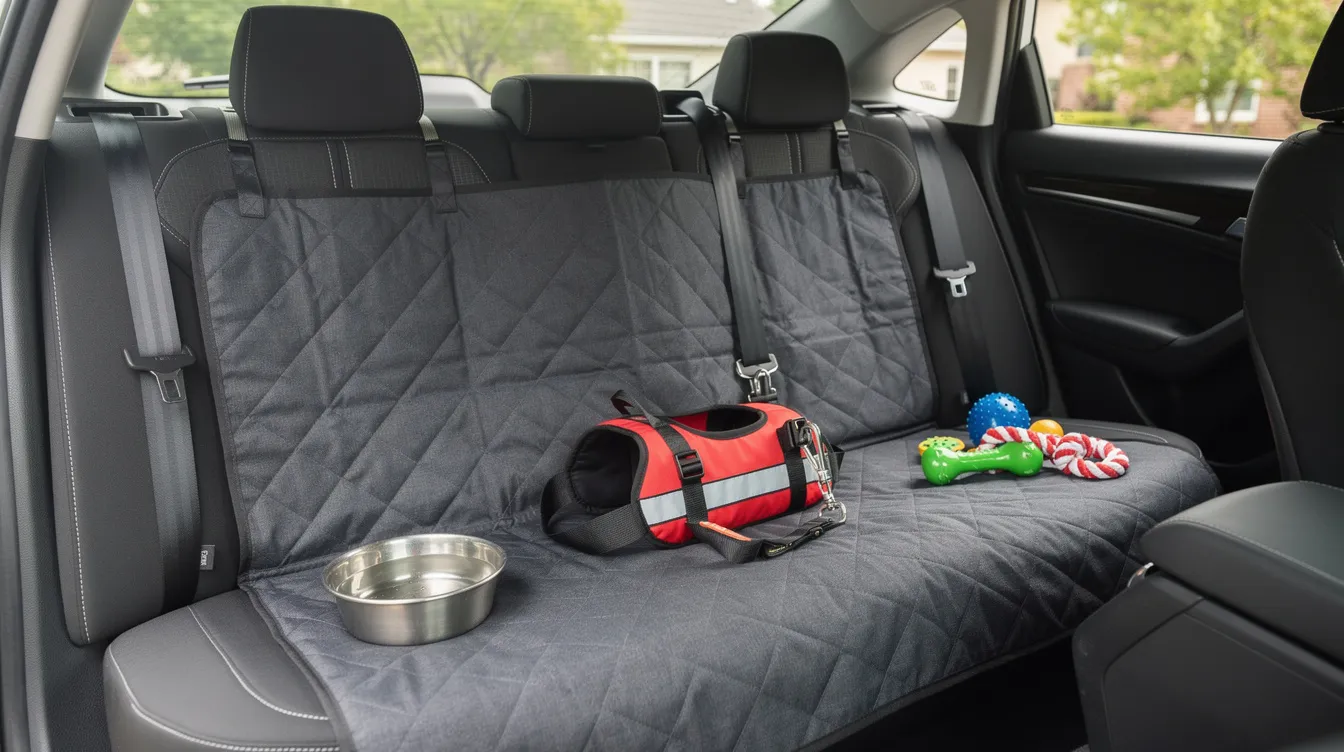
Useful dog car accessories include:
-
Waterproof rear-seat covers
-
Hammock-style protectors with seat belt openings
-
Boot liners for SUVs and wagons
-
Portable water bowls
-
Lead and poo-bag organisers
-
Cooling mats
-
Window sunshades
-
Chew toys or calming toys
-
Pet first-aid kit
-
“Dog on board” sticker
-
Emergency window tool kept near the driver
Hammock covers work well with booster seats and car harnesses for dogs, but they should not block seat belt access. If a cover makes it hard to latch the restraint correctly, choose a different cover.
When browsing for a dog car seat bunnings option or other big-box products, look for these support items on the same trip. Just remember that accessories support restraint; they do not replace it.
Real-World Examples and Recommended Setups
Here are practical examples of complete dog car safety setups.
Example 1: 5 kg toy breed
A 5 kg toy breed can use a small booster dog seat for car on the rear seat. The booster should be secured with the car’s belt through the frame. The dog wears a lightweight car harness puppy or small crash-tested harness, clipped to a short dog seat belt or internal tether.
Best for: visibility, anxiety reduction, short urban trips, and small dogs that like to look out the window.
Example 2: 18 kg staffy cross
An 18 kg staffy cross in a hatchback is usually better suited to a padded dog car harness bunnings-style harness or, preferably, a crash-tested harness with published safety data. The shoulder belt threads through the harness, and a washable hammock cover protects the seat.
Best for: medium dogs, daily driving, and owners who need a flexible setup.
Example 3: 30+ kg retriever
A 30+ kg retriever travelling in an SUV may be safest in a crash-tested crate or a heavy-duty harness specifically designed for large dogs. The crate should be securely anchored to prevent movement during sudden stops, and it must be large enough for the dog to stand, turn, and lie down comfortably. For those who prefer harnesses, look for a dog seat belt and harness combination with robust metal hardware and reinforced stitching to handle the forces involved in a crash. This setup ensures maximum safety and comfort for your large dog during long journeys.
Best for: large dogs, long-distance travel, SUVs, and owners prioritizing maximum safety.
Where to Find Quality Dog Seat for Car Products
Many pet owners search for dog car seat bunnings or dog seat belt bunnings products due to their accessibility and variety. Bunnings offers a range of dog car accessories, including booster seats, harnesses, and restraints suitable for different dog sizes and travel needs. When shopping, always check for products labeled as crash-tested or compliant with safety standards.
Besides Bunnings, specialty pet stores and online retailers provide a broader selection of high-quality car harness puppy options and car harnesses for dogs with proven safety credentials. Brands like EzyDog and PetSafe offer products designed specifically for vehicle travel, ensuring your dog’s safety and comfort.
Final Tips for Safe Dog Travel in Cars
-
Always use a properly fitted dog seat belt and harness rather than attaching restraints to collars.
-
Regularly inspect your dog seat for car and harness for wear and tear.
-
Never leave your dog unattended in a hot car, especially when using dog ute restraint bunnings setups.
-
Combine safety restraints with practical dog in car accessories like seat covers and water bowls for a complete travel solution.
-
Train your dog gradually to accept the restraint system to reduce anxiety and improve compliance.
By investing in the right dog seat for car, car harness puppy, and other dog car accessories, you ensure safer, more comfortable journeys for both you and your furry friend. Prioritize safety, comfort, and legal compliance to make every trip a positive experience.
This comprehensive guide covers all aspects of choosing, installing, and using dog car restraints, including dog seat belts, car harnesses for dogs, and dog restraints for cars available at Bunnings and other retailers. With the right setup, your dog can enjoy safe and enjoyable travel in 2026 and beyond.
0 comments